Does Prayer Really “Work”?
Nullam imperdiet, sem at fringilla lobortis, sem nibh fringilla nibh, id gravidrus sit amet erat. Aenean nec nisi quis nisi...




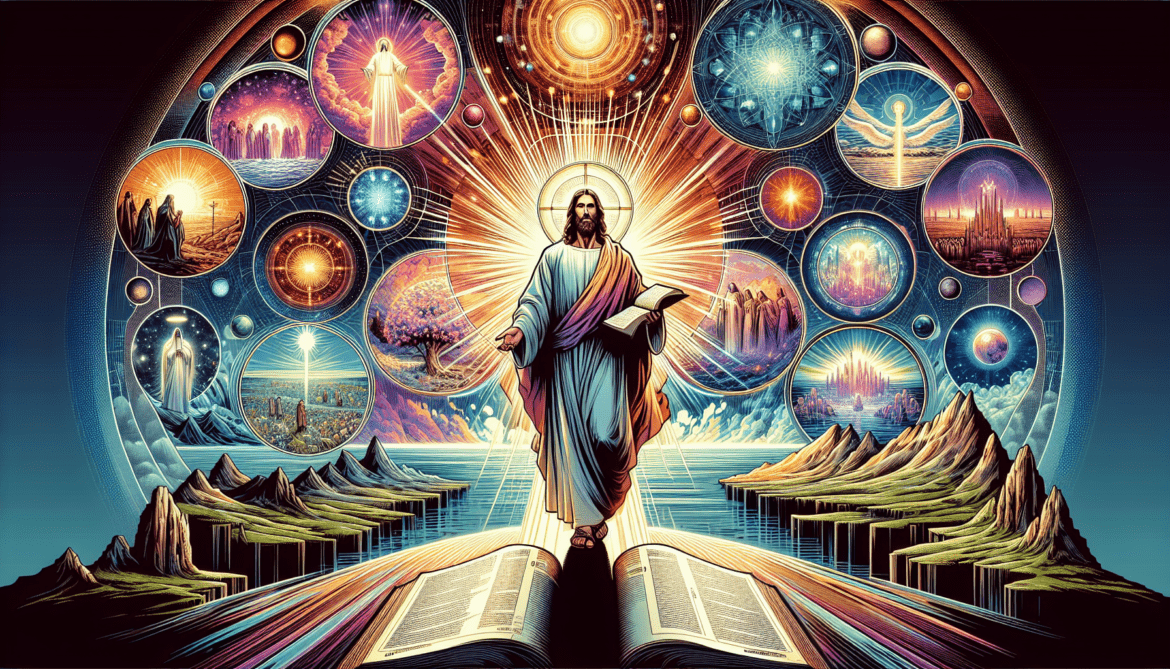
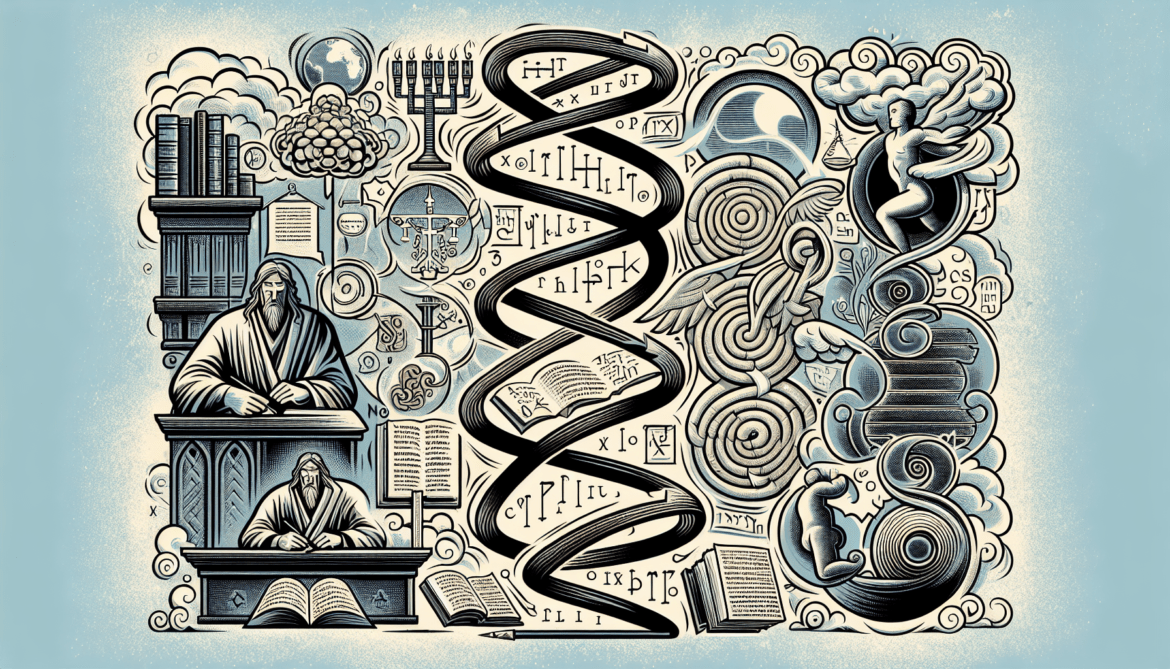
Welcome back to our study on Revelation. This discussion aims to provide an overarching view that will help interpret this complex book. Understanding the genre is crucial for grasping the content of Revelation. Last time, we focused on the center of the book and its connections to Hellenistic traditions, which shaped how these texts were written.
The Hellenistic world featured a vivid, imaginative culture where people engaged with various forms of storytelling, including tragedy and comedy. Most individuals were familiar with these narratives and could easily recognize their themes and directions. This cultural background is essential for understanding the beauty and depth of Revelation.
For example, in Revelation 1:1, it states, “The revelation of Jesus Christ, which God gave him to show to his servants the things that must soon take place.” This verse emphasizes the prophetic nature of the book, indicating that it is meant to convey specific messages to its audience.
It is vital to pay attention to genre because it significantly influences how we read not only Revelation but any book or film. For instance, popular movies like Star Wars or Lord of the Rings follow specific story arcs that are recognizable to audiences. Understanding these trajectories can enhance our comprehension of the narratives.
One of the most important texts for interpreting Revelation is Aristotle’s Poetics. While some may find it controversial to reference a pagan philosopher, it is essential to recognize that Jesus and Paul also engaged with cultural elements of their time. Paul, for example, quoted pagan poets, as seen in Acts 17:28, where he states, “For we are indeed his offspring,” referencing the works of Epimenides and Aratus.
Living in a particular culture inevitably influences our perspectives. The biblical authors were aware of the philosophical ideas circulating in their society. When we read the book of Hebrews, which discusses shadows and realities, such as in Hebrews 10:1, “For since the law has but a shadow of the good things to come,” the audience would have understood these concepts within their cultural context.
It is important to note that the Bible was not written directly to modern readers but for a specific group of people in a particular time and place. This understanding does not diminish the authority of Scripture; rather, it enriches our interpretation. Recognizing the original audience helps us appreciate the intended messages and their relevance today.
For instance, Revelation 2:7 states, “He who has an ear, let him hear what the Spirit says to the churches.” This verse indicates that the messages were directed to specific churches facing particular challenges, making it clear that context matters.
In discussing Aristotle and poetics, the goal is not to use Aristotle as a lens for biblical interpretation but to explore the ideas that influenced the writers of the time. This approach allows us to understand their thought processes and the cultural backdrop against which they wrote. Understanding these influences can help us appreciate the richness of the text and its intended meanings.
In discussing the nature of stories, it is important to recognize that not all writers are inspired, but their observations can reflect universal truths. Aristotle did not create the laws of logic; rather, he described them, which proves useful. In his poetics, he identifies four gestures of the soul, indicating that there are essentially four types of stories. The two most fundamental stories are tragedy and comedy, which are widely understood.
When we think of comedy, we might picture slapstick humor, but it is a deeper aspect of human experience found globally. Jesus, when comparing his ministry with that of John the Baptist, pointed out that Israel rejected both, despite their differences. John approached his ministry with a tragic tone, emphasizing the need for repentance through his baptism of repentance. This is evident in Matthew 3:2, where John proclaims, “Repent, for the kingdom of heaven has come near.” In contrast, Jesus did not baptize, representing the glory that follows repentance, highlighting a different aspect of his mission, as seen in John 4:2.
Jesus articulated this contrast using a metaphor from the dramatic arts. He said, “We played the pipes for you, and you didn’t dance; we sang a dirge for you, and you didn’t mourn” (Matthew 11:17). Here, dancing symbolizes the comedic aspect, while mourning represents the tragic. This understanding was shared by everyone in that cultural context.
Goethe noted that to understand a poet, one must immerse themselves in the poet’s time and place. Thus, the fundamental stories of tragedy and comedy have different trajectories. Tragedy typically begins at a high point, such as Adam’s dominion in the garden, and then falls into despair due to sin. This narrative is reflected in Genesis 1:26-28, where God gives Adam dominion, followed by the fall in Genesis 3:6-7.
Aristotle mentioned that this often occurs within one circuit of the sun, mirroring the narrative of Genesis, which describes mankind’s fall. Conversely, comedy starts low and rises to a joyful conclusion, often culminating in a wedding, which signifies hope and fulfillment. This is illustrated in John 2:1-11, where Jesus performs his first miracle at a wedding in Cana, transforming water into wine.
It is noteworthy that comedies, particularly those before and during Jesus’ time, consistently conclude with weddings. While not every story ends this way, when a significant number do—such as 11 out of 11—it becomes essential to recognize this pattern. Comedies, despite being the antithesis of tragedy, maintain this trajectory from low to high, culminating in weddings. This is a significant observation, especially as we consider the ending of Revelation, which also concludes with the marriage of the Lamb. Revelation 19:7 states, “Let us rejoice and be glad and give him glory! For the wedding of the Lamb has come, and his bride has made herself ready.”
As we delve into how these themes relate to the understanding of Revelation, we can see parallels with the poetics of the Hebrew mind. For instance, the Psalms exhibit a chiastic structure where the two primary types are lament and thanksgiving. Lament carries a tragic tone, while thanksgiving emerges after deliverance, leading to a comedic resolution. The early Psalms are rich in lament, as seen in Psalm 13:1, “How long, Lord? Will you forget me forever?” But as one progresses toward the end, particularly in the Hallel Psalms (Psalms 113-118) and doxologies, there is a noticeable shift toward thanksgiving. For example, Psalm 150:6 states, “Let everything that has breath praise the Lord.” This reflects the gospel message, where Jesus indicated that the entirety of the Old Testament speaks of his sufferings and the glory that follows, as noted in Luke 24:26-27.
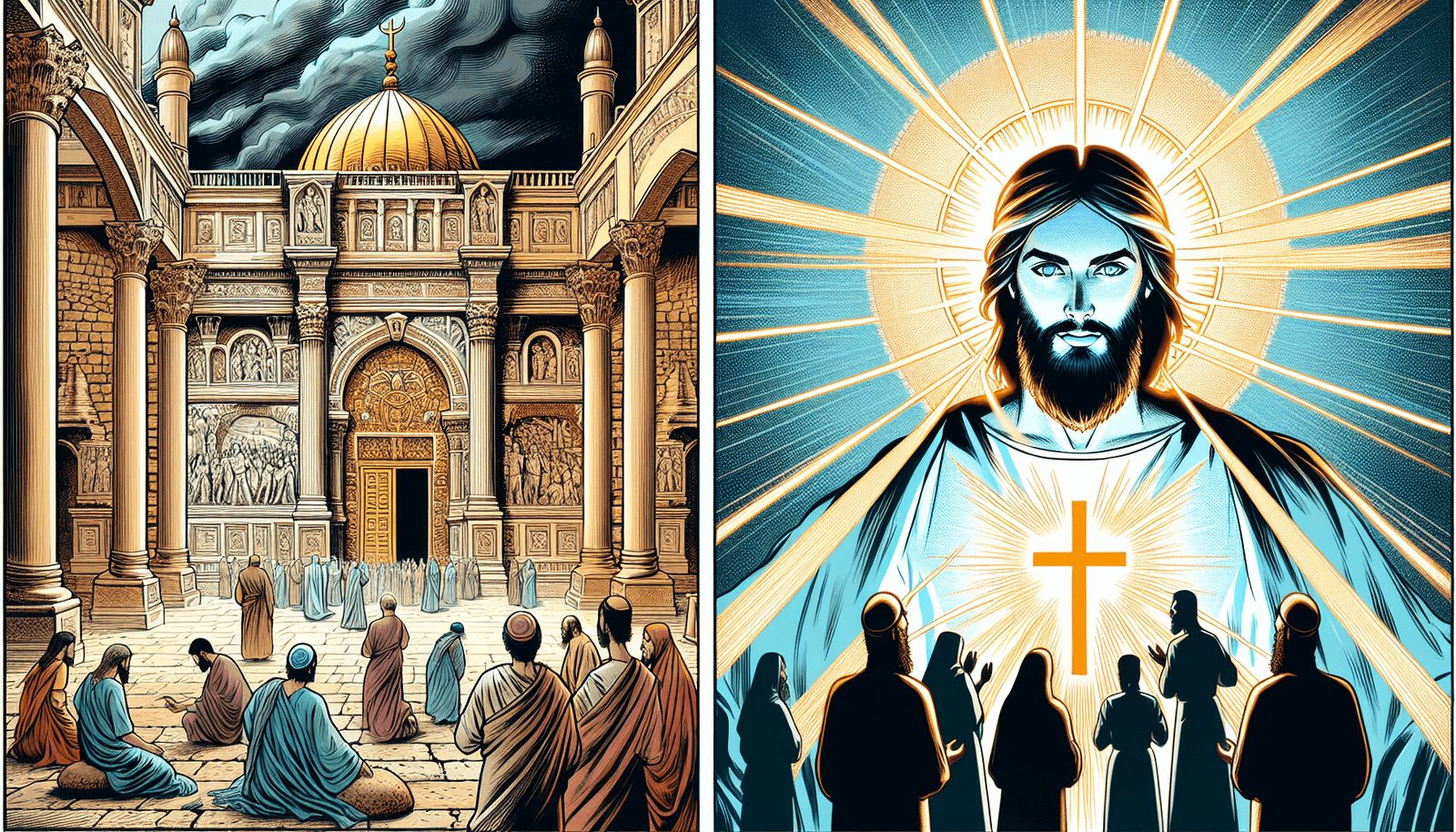
Understanding both tragedy and comedy is crucial. Without acknowledging the tragedy of the fall, one cannot grasp the depth of humanity’s plight. If we focus solely on comedy, one might overlook the seriousness of our condition. Conversely, if we only dwell on tragedy, we are left without hope. Both aspects frame our understanding of the narrative, and the sequence of these stories matters greatly.
Jesus highlighted the necessity of suffering in the Old Testament. Some rabbis believed in two messiahs: one who suffers, as depicted in Isaiah 53 (“He was despised and rejected by mankind, a man of suffering, and familiar with pain,” Isaiah 53:3) and Psalm 22 (“My God, my God, why have you forsaken me?” Psalm 22:1), and another who restores order and reigns gloriously, as seen in passages like Isaiah 9:6-7, which speaks of a ruler who will establish peace and justice. This duality is essential for comprehending the full scope of the messianic narrative.
In exploring the profound questions of life, we find that the prophets struggled to understand the relationship between suffering and glory. Peter highlights this struggle, asking how suffering connects to the glory that follows. Jesus provides the key to this understanding in Luke 24:26-27, when he speaks to the disciples on the road to Emmaus. He emphasizes that it was necessary for Christ to suffer before entering into His glory. This sequence—suffering followed by glory—is crucial.
God remains faithful to grant us glory after our suffering. This knowledge helps us endure hardship, knowing that the sufferings of this present age cannot compare to the glory that awaits us. Romans 8:18 states, “For I consider that the sufferings of this present time are not worth comparing with the glory that is to be revealed to us.” If we share in Christ’s sufferings, we will also reign with Him, as stated in 2 Timothy 2:12: “If we endure, we will also reign with him.”
This concept becomes foundational for the apostles after Jesus’ declaration in Luke 24. It reflects a deeper understanding of human experience, which Aristotle described as the mundus imaginalis—the world of imagination shaped by four narratives: tragedy, comedy, epic, and lyric. Tragedy and comedy encapsulate the dual aspects of suffering and glory. God has ordained both our suffering and the subsequent glory, echoing the words of Jesus in John 16:21, who likened sorrow to a woman in labor. Once the child is born, she forgets her pain. This encapsulates the essence of the gospel: suffering precedes glory.
Epic storytelling combines these elements, while lyric poetry expresses longing. In the first century, the Book of Revelation would not have been viewed as tragic, contrary to contemporary interpretations that often evoke fear and anxiety. The focus on judgments and beasts can distort the original message. Revelation 1:3 states, “Blessed is the one who reads aloud the words of this prophecy, and blessed are those who hear and take to heart what is written in it, because the time is near.” When we read Revelation through the lens of current events, we risk misunderstanding its true context.
In the first century, Revelation would have been recognized as a comedy, culminating in the sacred wedding, or hieros gamos. This reflects our covenant with God,We observe a familiar life sequence: birth, growth, decline, and death. This tragic cycle seems inescapable. However, with Jesus, this sequence transforms. We are born, flourish, decline, and die, but then we are born again through resurrection. John 3:3 states, “Very truly I tell you, no one can see the kingdom of God unless they are born again.” This radically alters our understanding of time and space, inviting us into a supernatural realm that transcends death.
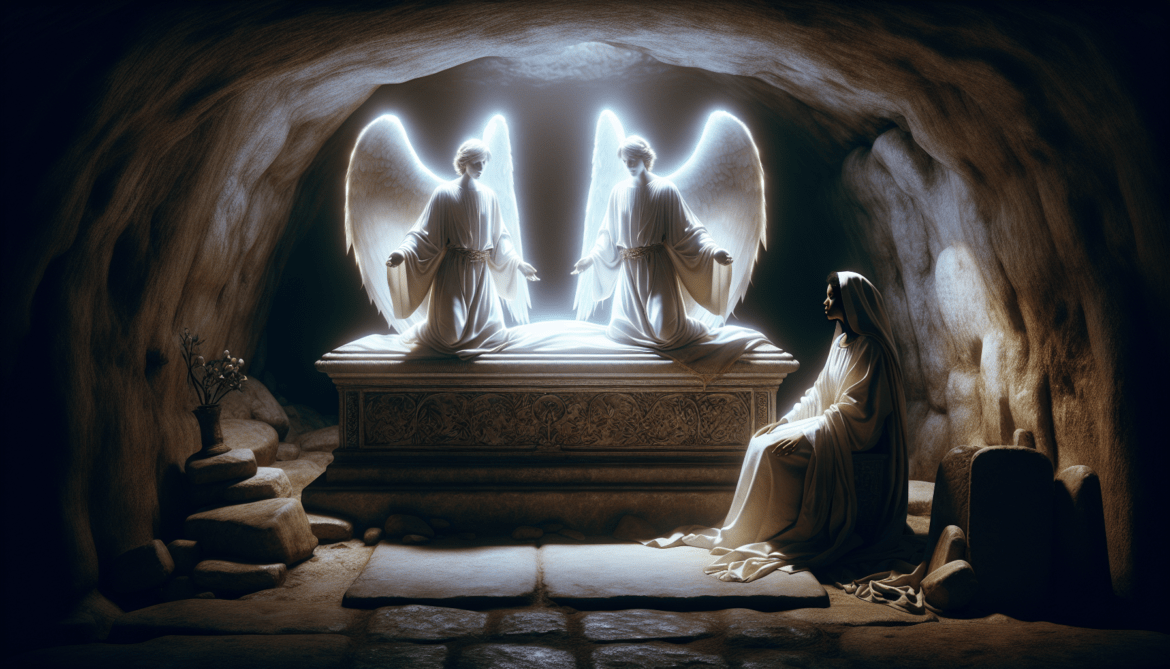
The resurrection signifies that the cosmic veil has been torn, revealing a truth that surpasses mere human experience. Hebrews 10:19-20 reminds us, “Therefore, brothers and sisters, since we have confidence to enter the Most Holy Place by the blood of Jesus, by a new and living way opened for us through the curtain, that is, his body.” This realm of reality is affirmed by scripture and accessed solely through faith. The Emmaus disciples, despite their knowledge of the Bible, initially failed to grasp this profound truth.
The afternoon of resurrection marks the greatest day in the history of redemption. Many have expressed their sadness, saying, “We had hoped,” reflecting their lost hopes due to the suffering they witnessed (Luke 24:21). They fail to recognize that God will follow suffering with glory. The resurrection requires a new wisdom, one that the Emmaus disciples learned from the risen Savior.
This new understanding acts as an eraser, obliterating familiar horizons and dissolving the tether of time that holds the earth in its orbit around the sun. We are called to reimagine the world as we once thought we knew it. We must leave the prison house of experience, breaking free from the inevitable cycle of life and death. Our understanding of death must die; instead, our imagination should be informed by a faith that allows us to see beyond the limits of the womb and the tomb. This faith helps us envision how the tomb can transform into the womb of new life, a theme echoed in Romans 8:18-21, which speaks of creation being set free from bondage to decay.
As stated in Romans 8:18, “I consider that our present sufferings are not worth comparing with the glory that will be revealed in us.” The Bible has always known this reality. Jesus spoke about it with his friends in Ephesus. The evidence of this new world is the reality of hope. The sequence of suffering followed by glory provides hope during difficult times, enabling perseverance through suffering.
Nullam imperdiet, sem at fringilla lobortis, sem nibh fringilla nibh, id gravidrus sit amet erat. Aenean nec nisi quis nisi venenatis dignissim in at sapien. Etiam eu libero vestibulum ante finibus hendrerit. Donec ac risus consectetur lorem volutpat tempus et sed sem.
Proin mo eales tie scelerisque tortor et imperdiet. Vestibulum tempor ut enim commodo ec ac risus con condim entum ec ac risus con.
Nullam imperdiet, sem at fringilla lobortis, sem nibh fringilla nibh, id gravidrus sit amet erat. Aenean nec nisi quis nisi venenatis dignissim in at sapien. Etiam eu libero vestibulum ante finibus hendrerit. Donec ac risus consectetur lorem volutpat tempus et sed sem.
Proin mo eales tie scelerisque tortor et imperdiet. Vestibulum tempor ut enim commodo ec ac risus con condim entum ec ac risus con